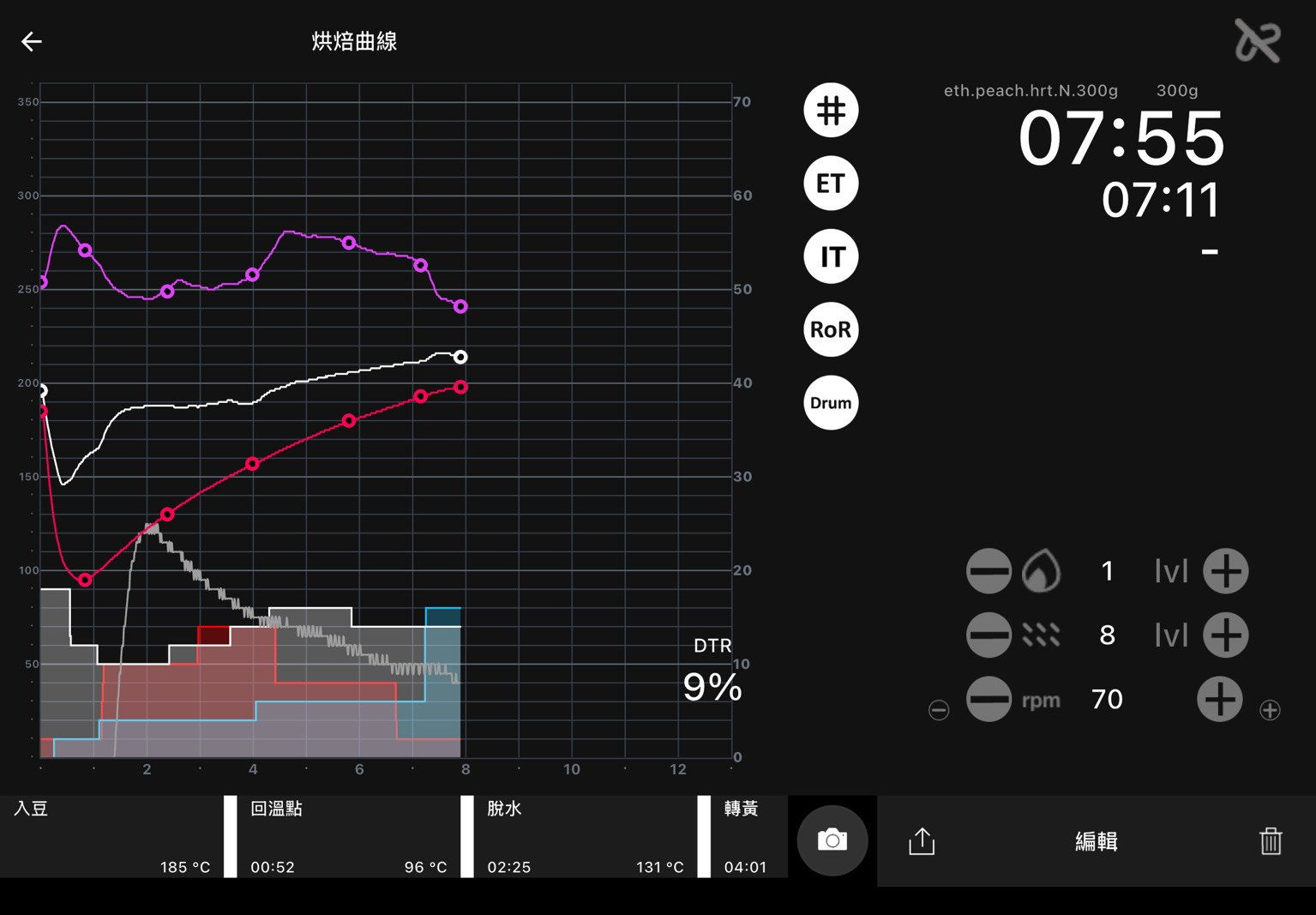
- Curve Name:
- Sidamo Twakok G1 Natural
- Origin:
- Ethiopia
- Processing Method:
- Natural Process / Dry Process
- Bean Variety:
- Heirloom
- Roasting Level:
- Medium Light Roast
- Batch Size:
- 300
Introduction
This is a natural-processed Ethiopian roasting profile with a higher development level, emphasizing "caramelly sweetness."
Detailed description
This roasting profile utilizes a fast pre-crack pace but extends development time after the First Crack to prioritize "traditional sweet aromas." Because natural Ethiopian beans typically crack earlier than washed varieties, roasters often cut development short; however, this approach intentionally lingers to build complexity. A key highlight is the dynamic drum speed (RPM) management to control convective heat: high RPM at charge for initial energy, lower RPM during drying for bean homogenization, and a gradual increase as beans turn yellow to handle higher airflow and heat. Finally, the RPM is slightly reduced just before the First Crack and held steady to finish the roast.
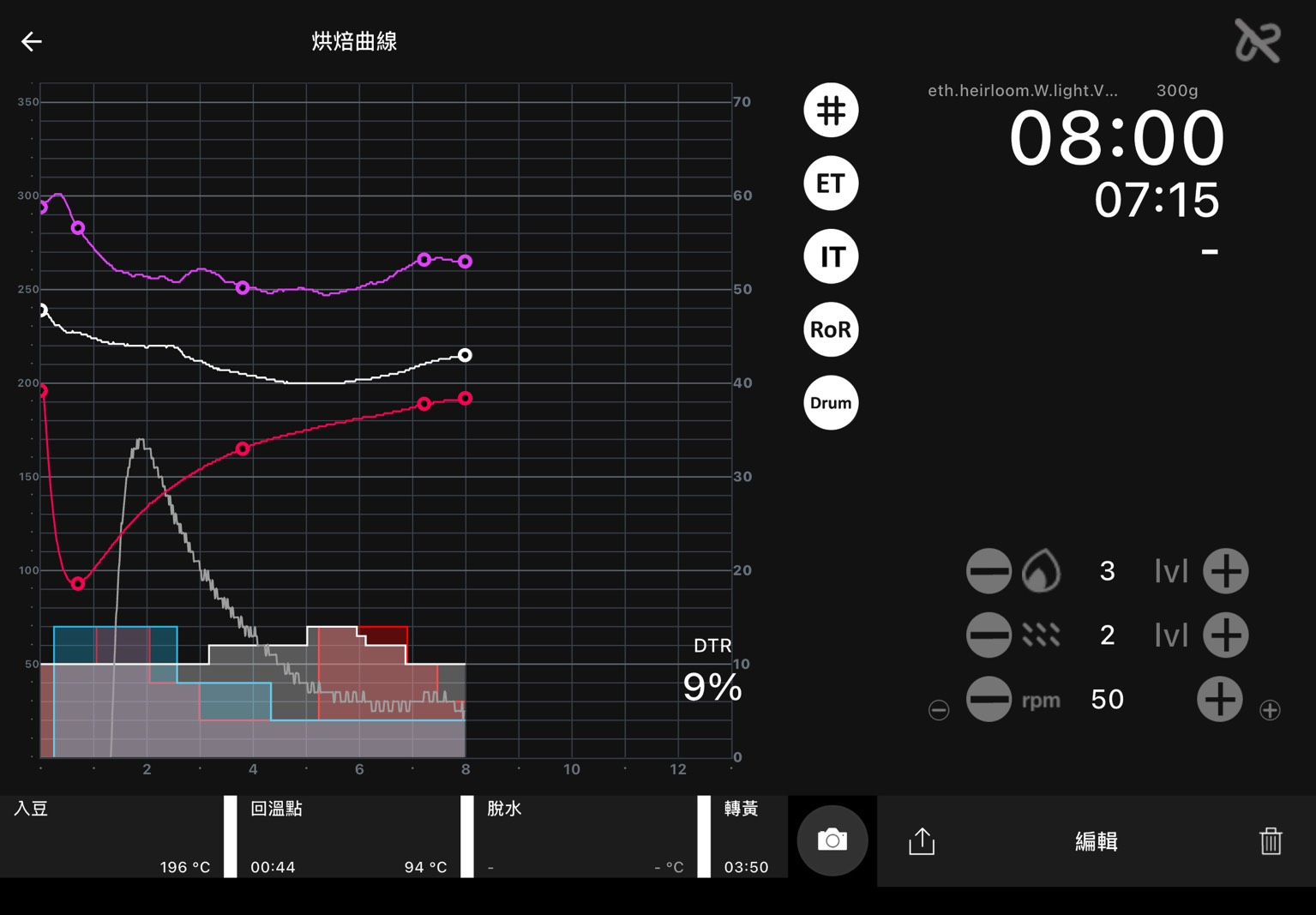
- Curve Name:
- Sidama Bensa Buncho G1 washed (longer Maillard)
- Origin:
- Ethiopia
- Processing Method:
- Washed Process / Wet Process
- Bean Variety:
- Heirloom
- Roasting Level:
- Very Light Roast
- Batch Size:
- 300
Introduction
Unlike the "Sidama Bensa Buncho G1 washed" profile, this approach better highlights classic citrus notes in traditionally processed Ethiopian washed.
Detailed description
This profile contrasts with "Sidama Bensa Buncho G1 washed" by using a higher charge temperature to reach the yellowing phase faster. After yellowing, the rate of rise is intentionally slowed. This extends the Maillard phase before First Crack, allowing for more complete chemical reactions. This is crucial for low-fermentation washed beans, as they require more time to synthesize the classic "Ethiopian washed" aromatic compounds and sweetness. By extending the mid-roast, the coffee achieves a full flavor profile without needing long development after First Crack, preserving its light-roast character. Note: the timing and intensity of reducing and reapplying heat. Use these settings as a baseline to fine-tune your adjustments or shift the re-heating points to suit your personal taste.
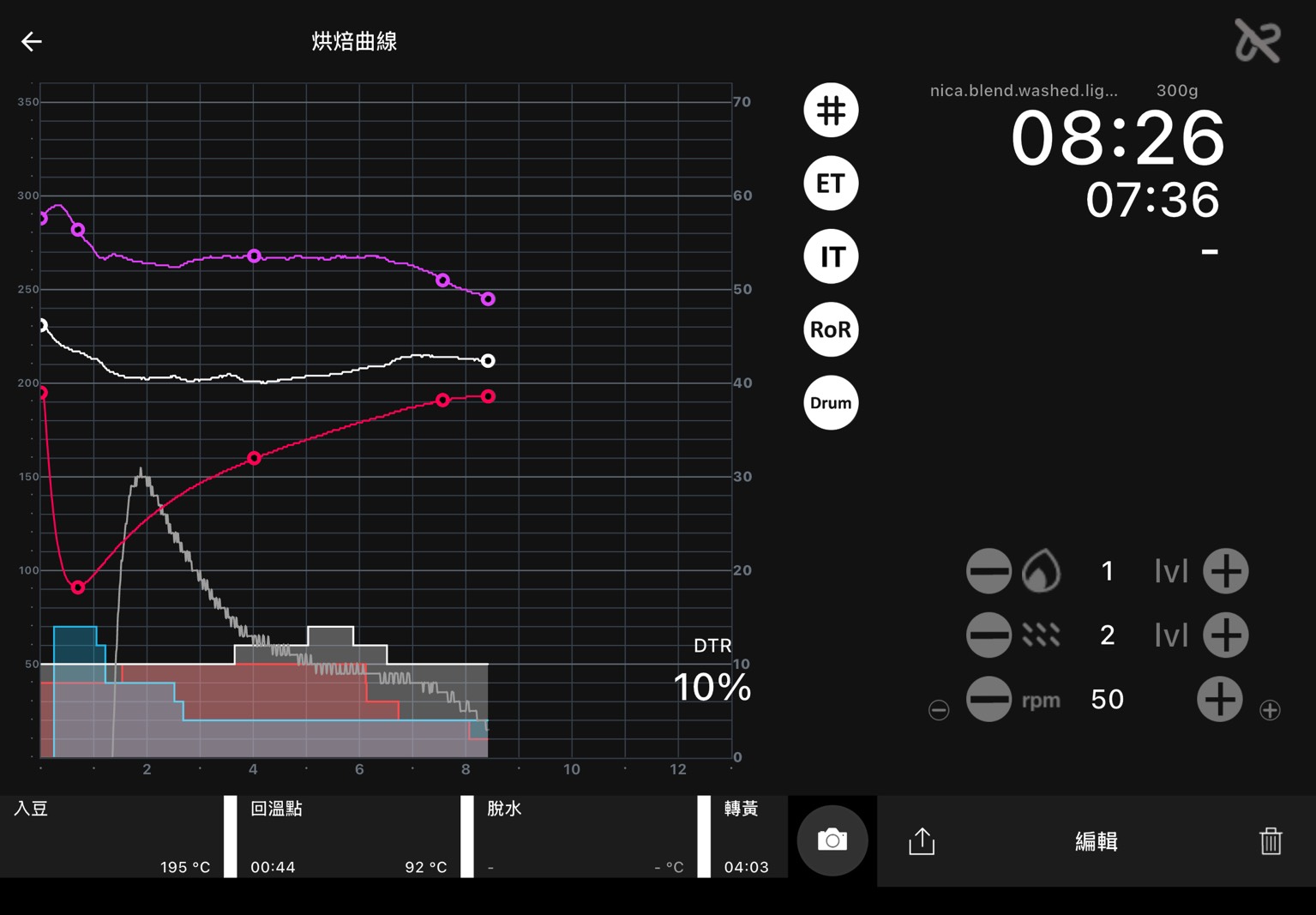
- Curve Name:
- Centro-Americano washed profile for coloring-difficult beans
- Origin:
- Nicaragua
- Processing Method:
- Washed Process / Wet Process
- Bean Variety:
- Field blend
- Roasting Level:
- Very Light Roast
- Batch Size:
- 300
Introduction
Light roast profile for hard-to-color Central American washed beans, like Nicaraguan washed or large-bean sized Brazil pulped naturals.
Detailed description
For beans that resist coloring, the main concern isn't the shade, but avoiding "baked" defects like harsh nutty or roasted peanut flavors. To prevent this, the profile uses a higher charge temperature to shorten the initial dehydration phase. Once entering the Maillard stage, the pace slows to a steady, deliberate rhythm. This strategy ensures more moisture is available during Maillard reactions and extends the reaction time for better flavor development.
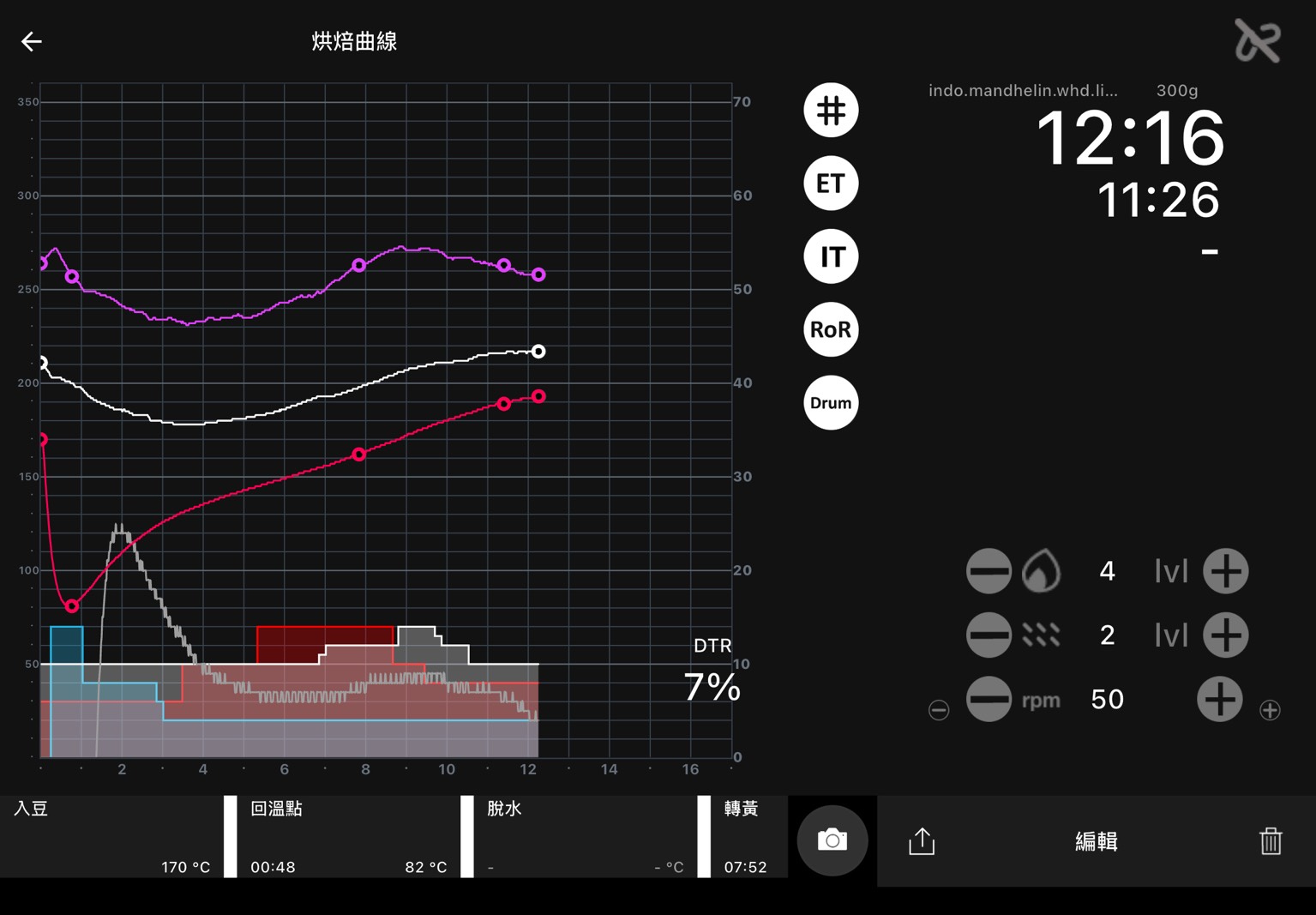
- Curve Name:
- Triple picked Mandheling
- Origin:
- Indonesia
- Processing Method:
- Wet-hulled
- Bean Variety:
- Arabica
- Roasting Level:
- Light Roast
- Batch Size:
- 300
Introduction
Light roast Mandheling profile: expect herbal notes alongside modern fruit acidity (ripe orange, plum). A novel, must-try style.
Detailed description
Despite being a "light roast," Mandheling's high moisture and distinct herbal profile make it difficult to achieve the pale colors of other light roasts. This profile avoids a low charge temperature but uses a gentler initial heating phase compared to other light roasts of the same batch size. As dehydration ends and yellowing begins, heat is significantly increased and maintained through the final stages. This ensures enough thermal energy to transform raw grassy notes into sweetness without over-extending development time, preserving its light-roast character.
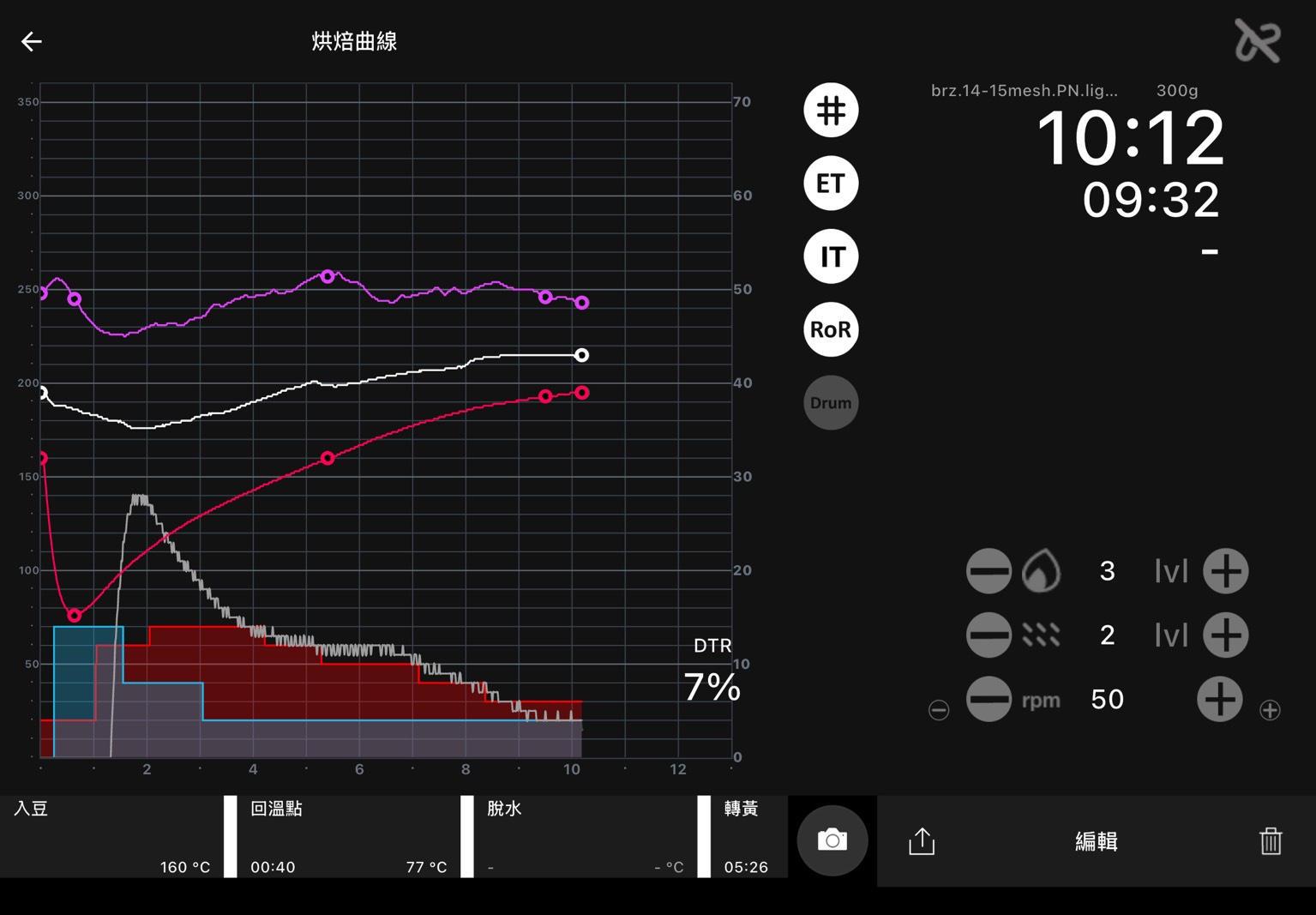
- Curve Name:
- 14-15 mesh size O'coffee Pulped Natural
- Origin:
- Brazil
- Processing Method:
- Semi-Washed / Wet-Hulled (Giling Basah)
- Bean Variety:
- Field blend
- Roasting Level:
- Light Roast
- Batch Size:
Introduction
A light roast profile designed specifically for "small-sized" commercial Brazilian beans.
Detailed description
Unlike 16–18 mesh Brazilian commercial beans, these 14–15 mesh beans have distinct roasting characteristics. The profile uses a "gentle heat rise" strategy to ensure even heating. By slowing the rate of rise (RoR) in the late Maillard phase just before the First Crack, the beans gain more reaction time. This deliberate pace enhances the development of traditional "coffee flavors" and ensures a more balanced cup.
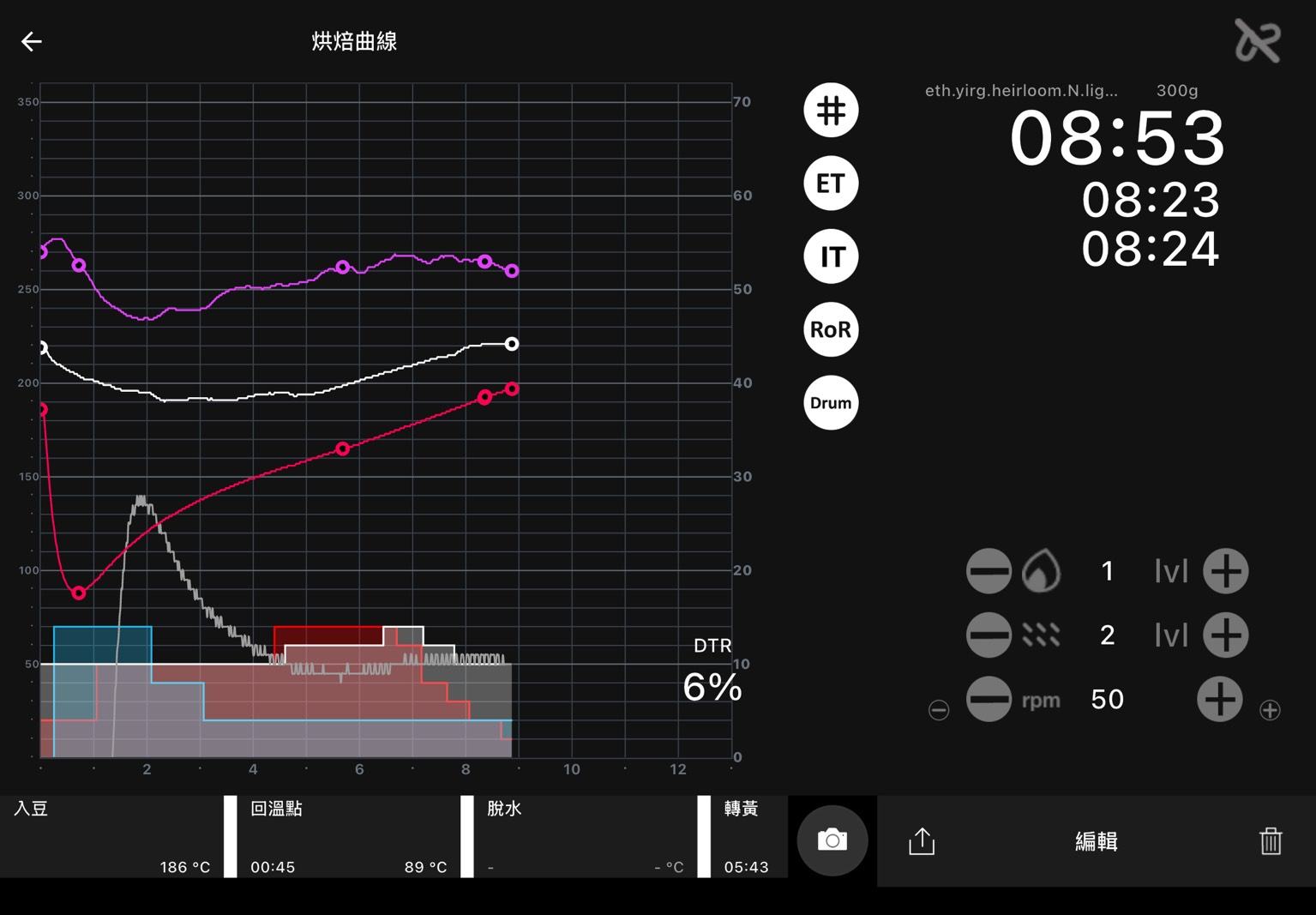
- Curve Name:
- Yirgacheffe Halo Beriti G1 Natural
- Origin:
- Ethiopia
- Processing Method:
- Natural Process / Dry Process
- Bean Variety:
- Heirloom
- Roasting Level:
- Very Light Roast
- Batch Size:
- 300
Introduction
A roasting profile designed for natural Ethiopian beans that balances sweet and sour notes while maximizing cup clarity.
Detailed description
Traditional natural processing leaves sugar-rich fruit pulp on the bean during drying, allowing residual sugars to permeate the surface cell structure. This makes the beans highly susceptible to scorching or over-caramelization if heat is applied too aggressively. While there is no absolute rule that naturals must be roasted slower than washed coffees, this profile adopts a conservative pace to account for these sugars. The goal is a gentle, light roast that achieves a delicate balance of acidity and sweetness.
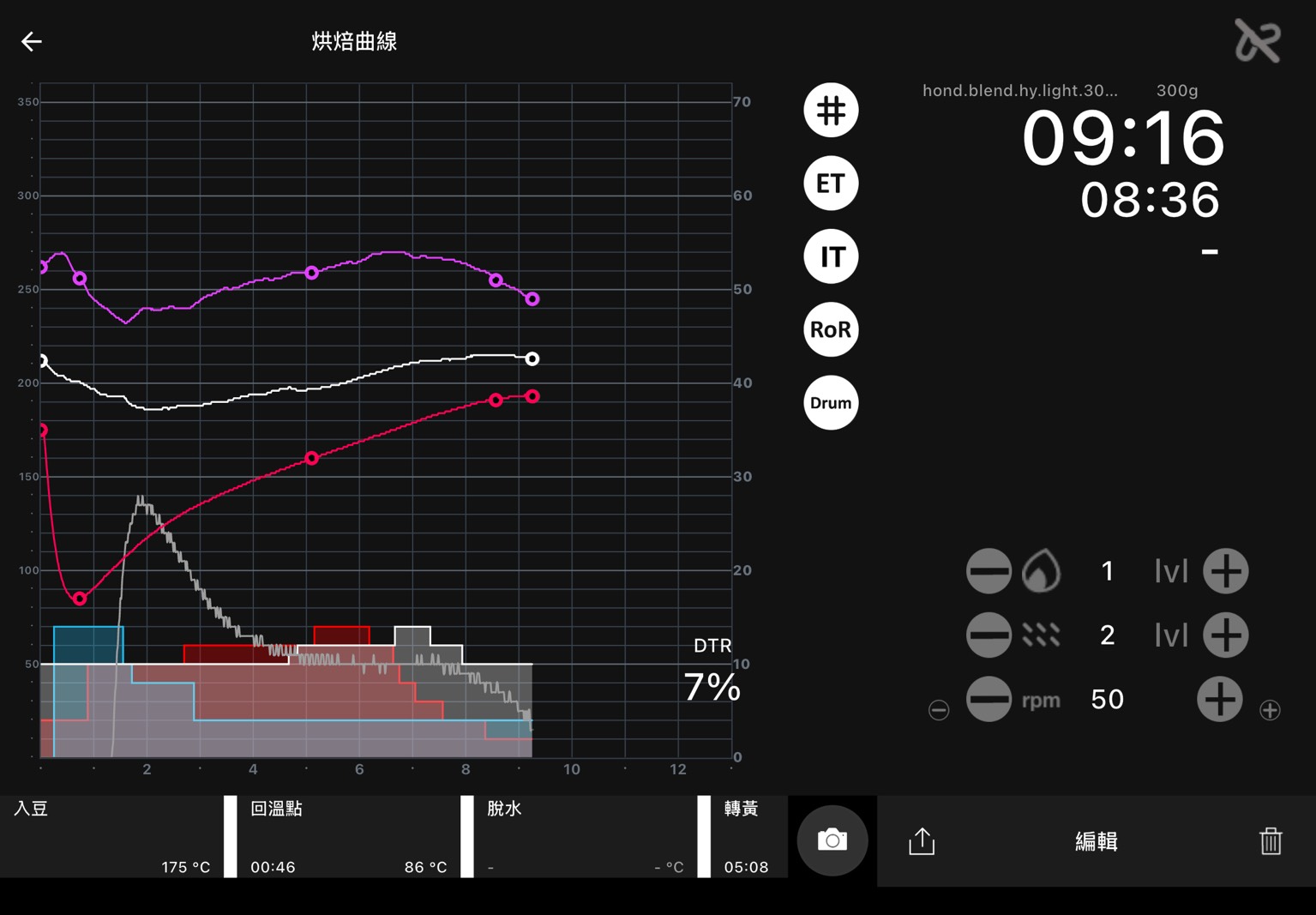
- Curve Name:
- field blend Honey processed
- Origin:
- Honduras
- Processing Method:
- Honey Process / Pulped Natural
- Bean Variety:
- Field blend
- Roasting Level:
- Very Light Roast
- Batch Size:
- 300
Introduction
Light roast profile for Central American honey-processed coffee beans.
Detailed description
Compared to Central American washed beans, this profile uses a higher charge temperature to preserve more acidity. Beyond that, it follows a standard "steady heat rise" approach without special adjustments. Notably, this is a traditional honey process emphasizing gentle sweetness rather than the high-intensity fermentation common today. It lacks both sharp brightness and heavy body, focusing instead on a balanced, mild profile.
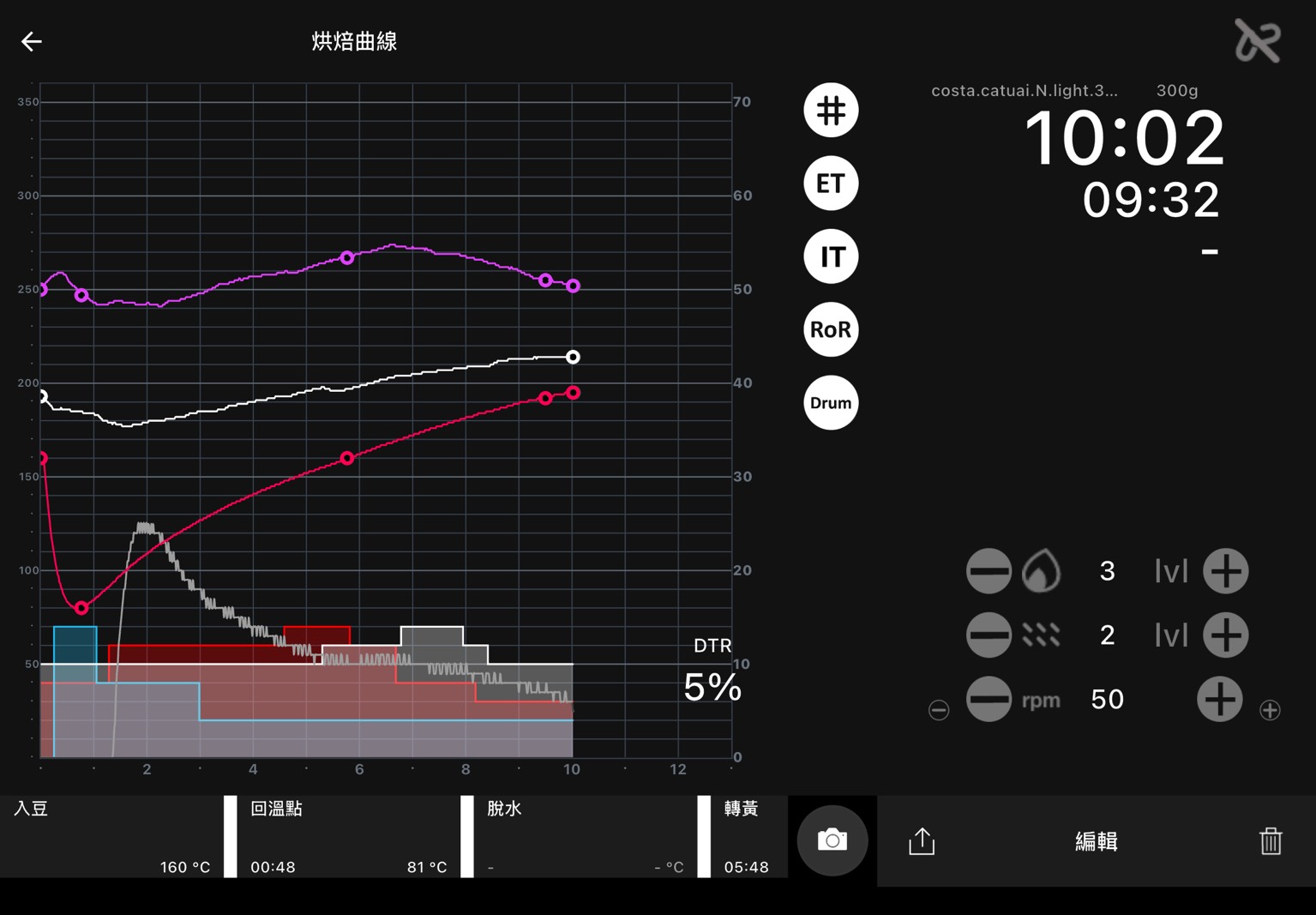
- Curve Name:
- Catuai Natural
- Origin:
- Costa Rica
- Processing Method:
- Natural Process / Dry Process
- Bean Variety:
- Catuai
- Roasting Level:
- Very Light Roast
- Batch Size:
- 300
Introduction
Light roast profile for a typical natural Central Americans. High fermentation levels here mimic anaerobic-style flavors.
Detailed description
This Costa Rican coffee represents typical Central American naturals, featuring distinct fermentation notes and a yellowish, reddish-brown raw bean appearance. Key characteristics include a delayed First Crack (by a few degrees) and a short Development Time to prevent excessive body or heaviness. The profile uses a "steady heat rise" strategy, avoiding rapid temperature spikes to protect the bean structure from overheating.
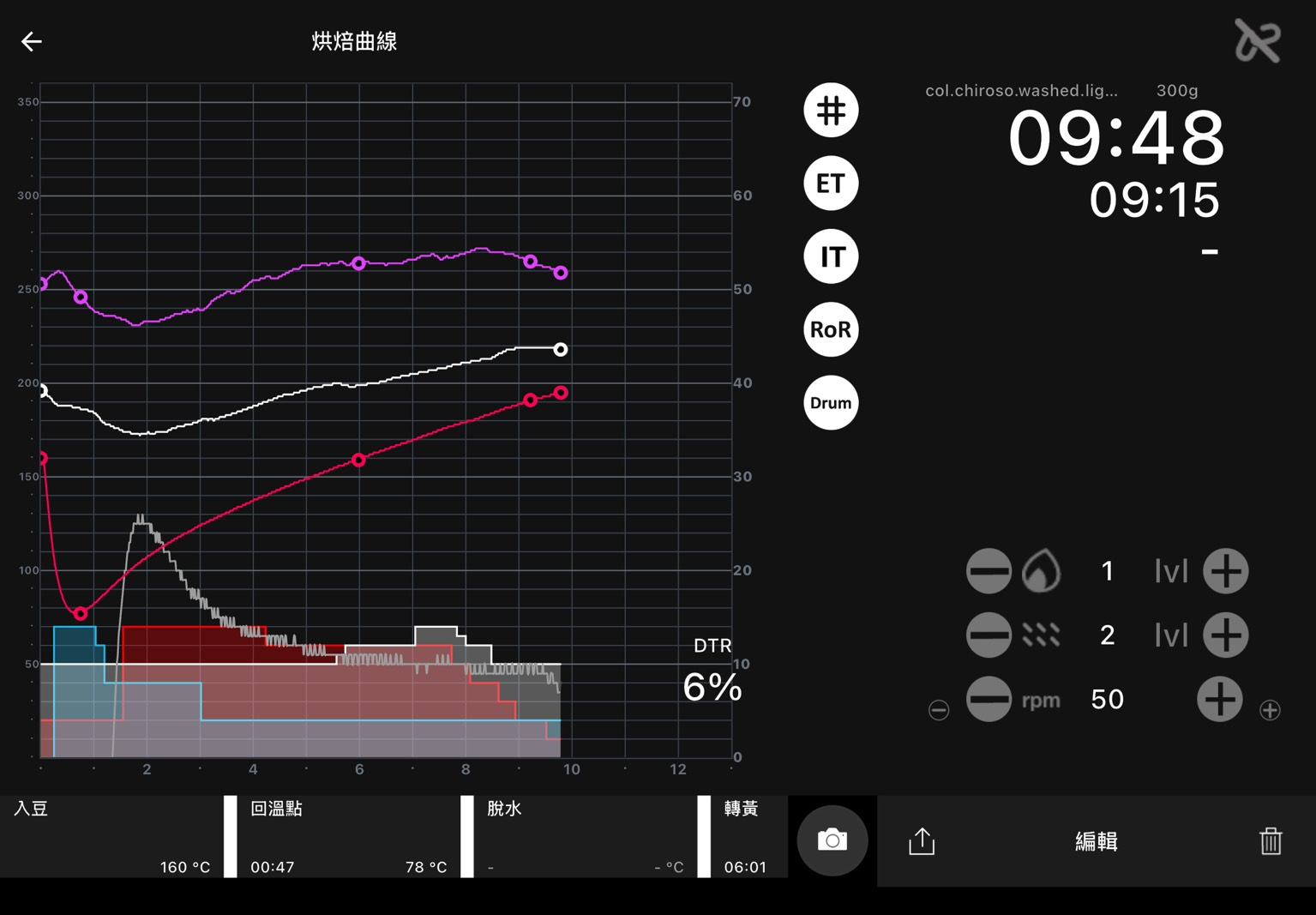
- Curve Name:
- Chiroso washed
- Origin:
- Colombia
- Processing Method:
- Washed Process / Wet Process
- Bean Variety:
- Chiroso
- Roasting Level:
- Very Light Roast
- Batch Size:
- 300
Introduction
This Central American washed bean takes on color quickly, requiring a different roasting pace than slower-coloring varieties to achieve a light roast.
Detailed description
This Chiroso profile uses a gentle, steady pace to produce a clean, balanced cup. The goal is to highlight light-roast sweetness while preserving the bean's inherent acidity.
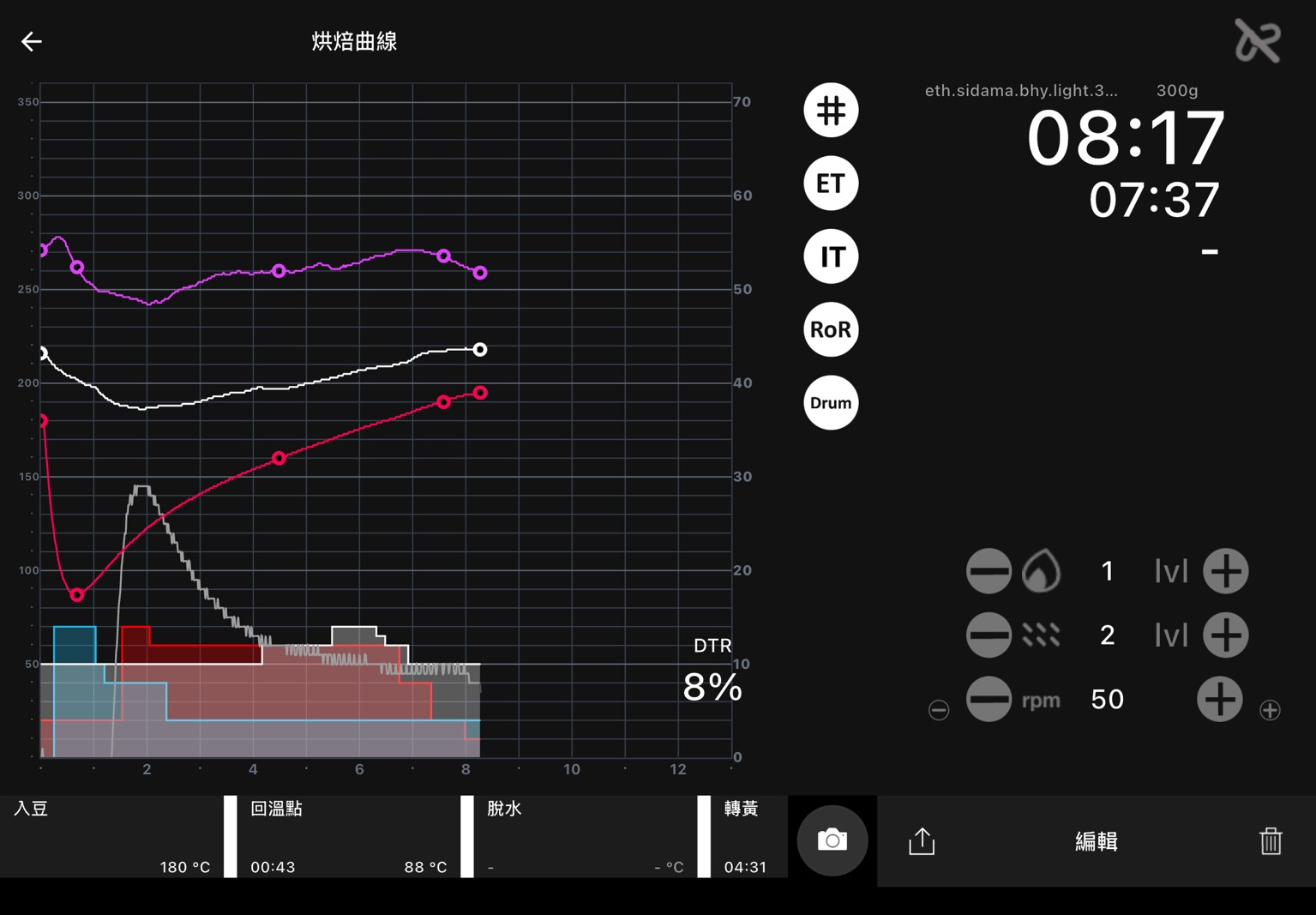
- Curve Name:
- Sidama Bensa Buncho G1 Black honey
- Origin:
- Ethiopia
- Processing Method:
- Black Honey Process
- Bean Variety:
- Heirloom
- Roasting Level:
- Very Light Roast
- Batch Size:
- 300
Introduction
This profile slightly slower than it's washed processed counterpart but still fast enough to preserve origin character and prevent over-caramelization from masking the flavor.
Detailed description
Despite being labeled "Black Honey," this lot’s fermentation level is closer to a standard honey process rather than an anaerobic-style profile. The primary difference between this and the washed lot from the same station is the charge temperature. A lower initial temperature is used to ensure a gentler heat application; this prevents scorching, as honey-processed beans often contain higher residual sugars in their surface structure that are more sensitive to heat.
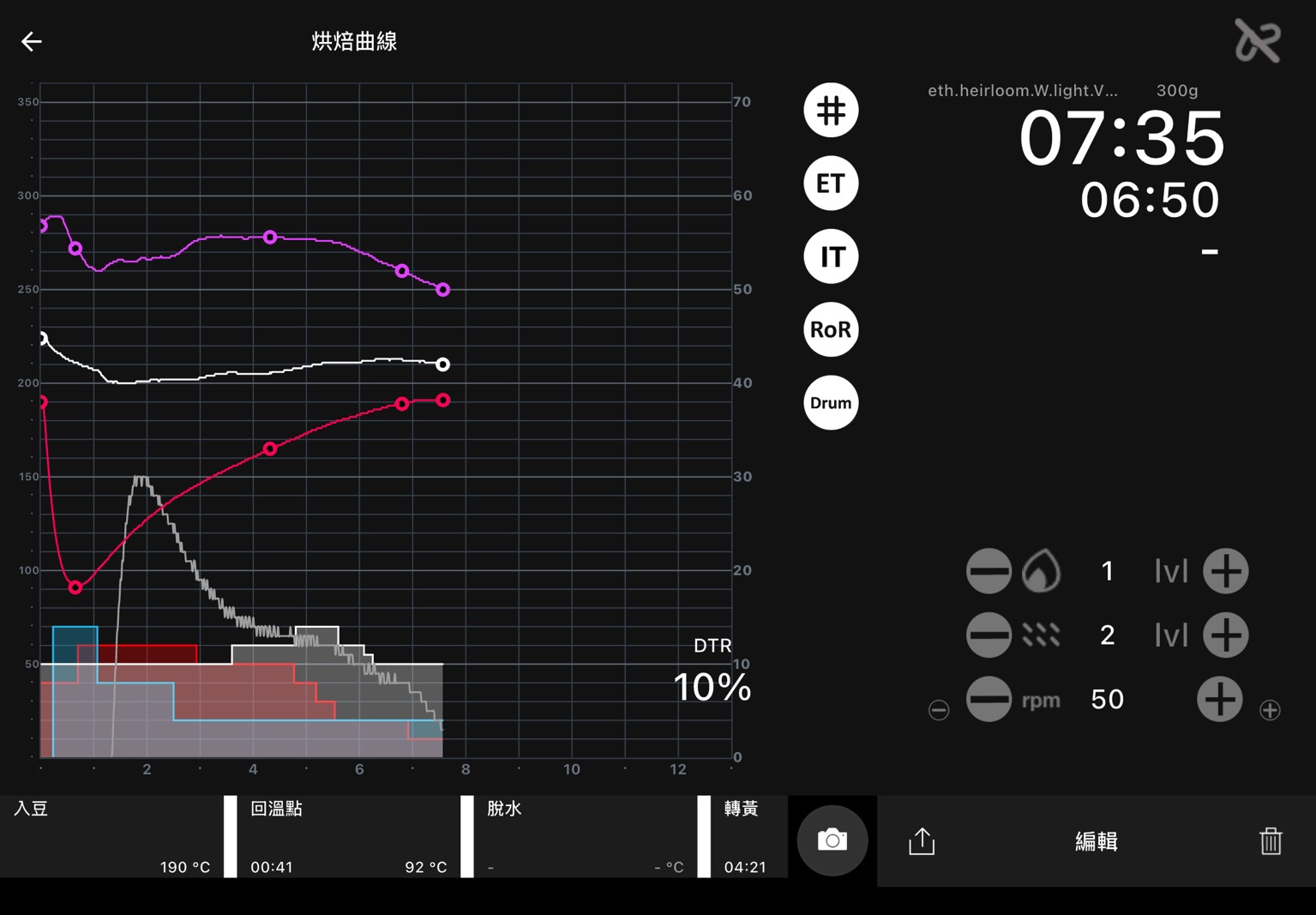
- Curve Name:
- Sidama Bensa Buncho G1 washed
- Origin:
- Ethiopia
- Processing Method:
- Washed Process / Wet Process
- Bean Variety:
- Heirloom
- Roasting Level:
- Very Light Roast
- Batch Size:
- 300
Introduction
A roasting profile that uses a faster pace to showcase the bright style of a washed Ethiopian coffee.
Detailed description
Using a relatively high charge temperature to provide the beans with more thermal energy right at the beginning of the roast. The reason for this is as follows: Ethiopian green beans are typically smaller in size. For a given weight of green coffee, smaller beans result in a higher surface area-to-mass ratio for the entire bean pile. This means the beans can absorb thermal energy from the external environment more easily and quickly; therefore, the energy used during the early stages of the roast is increased accordingly.
- Curve Name:
- Sidamo Twakok G1 Natural
- Origin:
- Ethiopia
- Processing Method:
- Natural Process / Dry Process
- Bean Variety:
- Heirloom
- Roasting Level:
- Medium Light Roast
- Batch Size:
- 300
Introduction
This is a natural-processed Ethiopian roasting profile with a higher development level, emphasizing "caramelly sweetness."
Detailed description
This roasting profile utilizes a fast pre-crack pace but extends development time after the First Crack to prioritize "traditional sweet aromas." Because natural Ethiopian beans typically crack earlier than washed varieties, roasters often cut development short; however, this approach intentionally lingers to build complexity. A key highlight is the dynamic drum speed (RPM) management to control convective heat: high RPM at charge for initial energy, lower RPM during drying for bean homogenization, and a gradual increase as beans turn yellow to handle higher airflow and heat. Finally, the RPM is slightly reduced just before the First Crack and held steady to finish the roast.